
Aerolite vs Knauf Insulation: Which Is Better for Your Home?
An Honest South African Comparison Based on 36 Years of Insulation Experience
SHOP KNAUF INSULATIONSHOP AEROLITE INSULATIONVIEW ALL CEILING INSULATIONChoosing between Aerolite and Knauf can be surprisingly difficult. Both are premium glasswool ceiling-insulation products; both are non-combustible, and both offer the same R3.38 product R-value at 135mm. The real differences are not found in exaggerated claims about one product keeping a house dramatically cooler than the other. They are found in handling, binder technology, acoustic performance, roll coverage, availability and price.
The short answer to Aerolite vs Knauf Insulation is straightforward: Knauf is our preferred premium option, while Aerolite remains the stronger value-for-money option. Knauf provides softer handling, low dust, ECOSE® binder technology, slightly higher published sound absorption and larger rolls. Aerolite provides virtually identical thermal and fire performance at a normally lower cost per square metre.
Neither is a poor choice. The best product depends on whether your priority is the most comfortable installation experience and premium material specification, or proven performance at the most competitive price.
Roof Insulations has supplied and installed glasswool insulation in South African homes, commercial buildings and industrial facilities for more than 36 years. This guide compares Aerolite and Knauf using published specifications and practical installation experience—not marketing slogans.
This Aerolite vs Knauf Insulation comparison focuses on the differences that will genuinely affect the purchase and installation decision.
Table Of Content
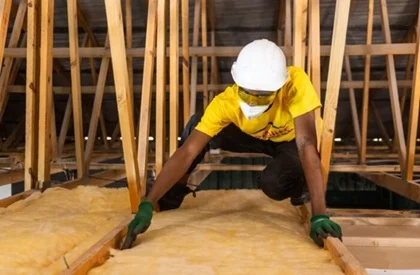
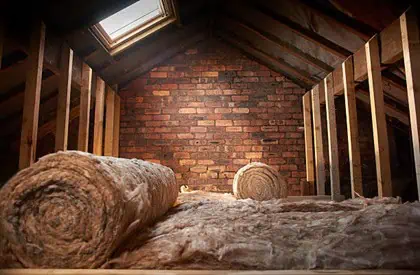
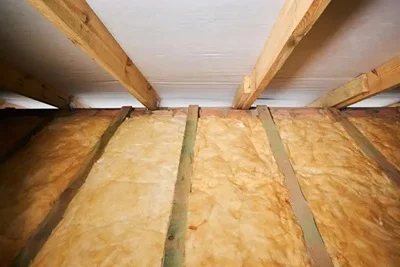
Aerolite vs Knauf Insulation: Quick Verdict
-
Best thermal performance: Draw at 135mm
-
Best fire performance: Draw; both are non-combustible
-
Best acoustic performance: Slight advantage to Knauf
-
Softest handling and lowest dust: Knauf
-
Best binder and indoor-air credentials: Knauf
-
Best roll coverage and fewer joins: Knauf
-
Best purchase price and value: Usually Aerolite
-
Best premium choice: Knauf
-
Best budget-conscious professional choice: Aerolite
The important point is that Aerolite vs Knauf Insulation is not a contest between good and bad insulation. It is a comparison between two capable glasswool products with slightly different strengths.
For a quick buying decision, Aerolite vs Knauf Insulation comes down to premium features versus maximum value.
Aerolite vs Knauf Insulation Comparison Table
The following Aerolite vs Knauf Insulation table compares the leading 135mm products on the same basis.
| Feature | 135mm Aerolite | 135mm Knauf |
|---|---|---|
| Material | Glasswool | Glass mineral wool |
| Product R-value | R3.38 | R3.38 |
| Approximate total installed system R-value | R3.78 | R3.78 |
| Published fire classification | A1 non-combustible | A1 non-combustible |
| Roll dimensions | 5m × 1.2m | 7.5m × 1.2m |
| Coverage per roll | 6m² | 9m² |
| Published density | Approximately 11kg/m³ | Approximately 12kg/m³ |
| Published NRC at 135mm | 1.10 | 1.15 |
| Binder | Inert thermosetting resin | Bio-based ECOSE® Technology |
| Added formaldehyde or phenol claim | No equivalent manufacturer claim used here | No added formaldehyde or phenol |
| Handling | Modern Soft Touch glasswool | Very soft, low dust and pleasant to handle |
| Availability | Widely available and locally established | Imported premium product |
| Typical price position | Usually lower per square metre | Usually slightly higher per square metre |
| Best suited to | Performance and value | Premium handling and material specification |
Important: Product R-value and total roof-and-ceiling system R-value are different measurements. Compare product with product or complete system with complete system. An installed-system figure is not a guarantee that poor workmanship will still achieve the stated result.
What Is Aerolite Insulation?
Aerolite insulation is a flexible glasswool ceiling insulation manufactured by Isover. It uses fine glass fibres to trap millions of small air pockets, slowing heat transfer through the ceiling. This reduces summer heat gain and winter heat loss, helping the indoor temperature remain more stable.
Aerolite has been used in South Africa for many years and is one of the country’s best-known ceiling-insulation products. The current Aerolite Soft Touch product is softer and produces less dust than older generations of fibreglass insulation. It is compression-packed for transport and normally recovers to its intended thickness within approximately 24 to 48 hours after opening.
Aerolite is available in three primary residential thicknesses:
| Aerolite thickness | Roll dimensions | Coverage | Product R-value | Published NRC |
|---|---|---|---|---|
| 50mm | 10m × 1.2m | 12m² | R1.14 | 0.80 |
| 100mm | 6m × 1.2m | 7.2m² | R2.50 | 1.00 |
| 135mm | 5m × 1.2m | 6m² | R3.38 | 1.10 |
The 50mm product is commonly used as a top-up over existing insulation rather than as the only layer in an uninsulated ceiling. The 135mm product is the correct Aerolite option for the main Aerolite vs Knauf Insulation comparison because it matches Knauf’s leading residential thickness and R-value.
Within the Aerolite vs Knauf Insulation decision, Aerolite represents the established performance-and-value option.
Aerolite’s principal strengths include:
-
A1 non-combustible fire classification
-
Strong thermal and acoustic performance
-
Widely recognised specifications
-
Reliable local availability
-
Competitive price per square metre
-
Suitability for new homes, retrofits and top-up projects
-
Long product life when correctly installed and protected from damage
What Is Knauf Insulation?
Knauf insulation is a premium glass mineral wool insulation manufactured using ECOSE® Technology. It works according to the same basic thermal principle as Aerolite: fine glass fibres trap air and slow heat transfer through the ceiling or building envelope.
Knauf’s most recognisable difference is its brown colour. This is not a cosmetic dye. Knauf does not add artificial colour to imitate the familiar pink or yellow appearance associated with traditional glasswool. The natural brown appearance comes from its ECOSE® binder technology.
The ECOSE® binder is predominantly plant-based and made from rapidly renewable materials. Knauf states that products manufactured using this technology contain no added formaldehyde or phenol, produce low levels of dust and VOCs, and provide a more comfortable installer experience.
The standard Knauf range provides more thickness options than Aerolite:
| Knauf thickness | Typical roll dimensions | Coverage | Product R-value |
|---|---|---|---|
| 50mm | 19m × 1.2m | 22.8m² | R1.25 |
| 75mm | 12.8m × 1.2m | 15.36m² | R1.88 |
| 100mm | 10m × 1.2m | 12m² | R2.50 |
| 135mm | 7.5m × 1.2m | 9m² | R3.38 |
The 135mm Knauf product is the most relevant residential option for Aerolite vs Knauf Insulation because both leading products deliver R3.38.
Within the Aerolite vs Knauf Insulation decision, Knauf represents the premium handling-and-material option.
Knauf’s primary advantages include:
-
Bio-based ECOSE® binder technology
-
No added formaldehyde or phenol
-
Low dust and softer handling
-
A1 non-combustible fire classification
-
Excellent thermal and acoustic properties
-
Larger roll coverage and fewer joins
-
Published long-term durability evidence
-
Additional 75mm thickness option
Thermal Performance: Aerolite vs Knauf Insulation
R-value measures resistance to heat flow. A higher R-value means greater resistance to heat passing through the insulation layer.
At 135mm, the comparison is simple:
-
135mm Aerolite product R-value: R3.38
-
135mm Knauf product R-value: R3.38
Their approximate total roof-and-ceiling system R-value is commonly stated as R3.78 for both products when the contribution of the other system components is included.
Thermally, Aerolite vs Knauf Insulation is a draw. It would be misleading to promise that one will make a correctly insulated house noticeably cooler than the other when both products are installed at the same thickness and R-value.
For temperature control alone, Aerolite vs Knauf Insulation should therefore be decided by installation quality and price rather than exaggerated performance claims.
There are small differences in density and fibre structure, but R3.38 remains R3.38. Any real-world difference will normally be caused by installation quality rather than the name printed on the packaging.
Product R-Value Versus Installed-System R-Value
The product R-value is the tested resistance of the insulation material itself. The total installed-system R-value may include the ceiling board, roof covering, air spaces and internal or external surface resistances.
It is incorrect to describe the installed-system R-value as automatically being “what you get in your roof.” Gaps, compression, thin sections and incomplete coverage can all reduce actual performance. A theoretical system total assumes that the product has been installed correctly.
When comparing Aerolite vs Knauf Insulation, use R3.38 against R3.38 or approximately R3.78 against R3.78. Do not compare the product value of one brand with the complete system value of the other.
Fire Safety: Aerolite vs Knauf Insulation
Fire performance is another area where these products are substantially equal. Aerolite and Knauf are both glasswool products with non-combustible classifications.
Aerolite Soft Touch is classified A1 under SANS 53501-1. Its technical information also lists non-combustibility under SANS testing. Knauf glass mineral wool is also classified as A1 non-combustible.
The previous page attempted to separate the products using unexplained 250°C temperature figures. Those figures do not provide homeowners with a useful or fair fire comparison. Certified product classifications are more meaningful than an isolated service-temperature or melting-temperature claim.
For ordinary residential selection, the correct conclusion is:
Aerolite vs Knauf Insulation is effectively a draw for fire resistance. Both provide a major fire-safety advantage over combustible or less highly classified insulation materials.
Fire classification should strengthen confidence in both options in the Aerolite vs Knauf Insulation comparison.
Regardless of which product is chosen, installers must maintain the required clearances around non-IC-rated downlights, transformers and other heat-producing electrical equipment. Insulation must never be used to conceal unsafe wiring.
Acoustic Performance: Knauf vs Aerolite Insulation
Ceiling insulation can absorb sound within the roof cavity and reduce airborne noise passing through the ceiling. This is especially valuable beneath metal roofing, in high-rainfall areas, near busy roads or in homes affected by neighbourhood and aircraft noise.
Published 135mm figures provide a small difference:
-
135mm Aerolite: NRC 1.10
-
135mm Knauf: NRC 1.15
This gives Knauf a slight published advantage, but it does not mean that Aerolite provides poor acoustic performance. NRC 1.10 is already an excellent absorption figure.
The practical Aerolite vs Knauf Insulation acoustic result also depends on the complete ceiling assembly. Ceiling-board thickness, cavity depth, roof type, gaps, penetrations and flanking paths can affect how much noise occupants hear.
Neither product should be advertised as complete “soundproofing” on its own. For dedicated home cinemas, studios, offices or noisy commercial buildings, the ceiling, walls and junction details must be designed as a system.
For normal residential noise control, Aerolite vs Knauf Insulation gives Knauf a small measured advantage rather than a dramatic victory.
Handling, Dust and Binder Technology
This is where Knauf has its clearest practical advantage.
Modern Aerolite Soft Touch is considerably softer and less dusty than older fibreglass products. It should not be described as the harsh older material many installers remember from decades ago. Nevertheless, it remains sensible to wear gloves, long clothing, eye protection and a suitable mask while cutting or installing glasswool.
Knauf was specifically developed to improve the installer experience. Its ECOSE® binder contributes to its softer feel, low dust and lack of the strong odour associated with some traditional binders. Knauf also publishes no-added-formaldehyde and no-added-phenol credentials.
For homeowners planning a DIY project, Knauf will normally be the more comfortable product to handle. For trained installers wearing suitable protective equipment, both products are straightforward to cut and install.
The honest Aerolite vs Knauf Insulation conclusion is:
-
Aerolite Soft Touch is safe and practical when handled correctly.
-
Knauf is normally softer, less dusty and more comfortable during installation.
-
Once installed above the ceiling, occupants do not routinely handle either product.
Handling is one of the few parts of Aerolite vs Knauf Insulation where most installers will notice an immediate difference.
Roll Size, Coverage and Installation Speed
At 135mm, Knauf covers 9 m² per roll while Aerolite covers6 m²². This produces a meaningful installation difference on larger ceilings.
For a 90 m² ceiling before allowing for waste:
-
Approximately 15 Aerolite rolls would be required at 6 m² each.
-
Approximately 10 Knauf rolls would be required at 9 m² each.
The cost must still be compared per square metre, because a larger Knauf roll naturally costs more per roll. Buying by roll price alone can make the wrong product appear cheaper.
Larger Knauf rolls create fewer roll ends and joins across a ceiling, potentially making large open areas faster to cover. Aerolite’s shorter rolls can sometimes be easier to move through small access hatches and manoeuvre inside low or congested roofs.
This part of Aerolite vs Knauf Insulation therefore depends on the roof:
-
Knauf has the coverage advantage on large, accessible ceilings.
-
Aerolite’s smaller rolls may be easier in tight or awkward roof spaces.
Always calculate Aerolite vs Knauf Insulation coverage from the measured ceiling area and expected cutting waste.
Why Installation Quality Matters More Than Brand
South African roofs seldom have the perfectly uniform beam spacing shown in overseas installation diagrams. Gaps may range from approximately 600mm to 1,300mm, with around 750mm being common in many homes. Rolls must be measured and cut to fit the actual roof.
Both products will underperform if they are:
-
Compressed below their intended thickness
-
Stretched or pulled apart to cover extra area
-
Installed with gaps between rolls
-
Stopped short of the external wall plates
-
Poorly fitted around beams, pipes and penetrations
-
Crushed beneath stored items or roof services
-
Used to cover unsafe electrical fittings
The difference between a careful installation and a poor installation is far greater than the tiny published differences found in parts of the Aerolite vs Knauf Insulation specification.
A professional Aerolite vs Knauf Insulation installation should therefore be judged by coverage, thickness and workmanship as well as brand.
Read our guide to installing ceiling insulation correctly before attempting a DIY installation.
Durability and Long-Term Performance
Both products are designed for long-term use and do not require routine maintenance when left undisturbed in a dry roof cavity.
Isover describes Aerolite as strong, resilient and flexible, with a long product life that will not readily age. Knauf publishes evidence that mineral wool manufactured using ECOSE® Technology can maintain its expected thermal performance for at least 50 years under appropriate conditions.
That gives Knauf particularly strong published durability evidence. It does not prove that Aerolite automatically settles, fails or needs early replacement. The previous page made that implication without adequate support.
For both products, long-term performance depends on:
-
Correct initial thickness
-
Recovery after compression packing
-
Protection from roof leaks and physical damage
-
Avoiding unnecessary disturbance
-
Preventing tradespeople from crushing or removing sections
-
Maintaining complete ceiling coverage
The fair Aerolite vs Knauf Insulation verdict is that both should provide decades of service when correctly installed, while Knauf has the stronger specifically published long-term performance claim.
Durability should not be used to frighten buyers away from either product in the Aerolite vs Knauf Insulation decision.
Moisture, Condensation and Roof Leaks
Aerolite is described as non-hygroscopic and compatible with standard building materials. Knauf glass mineral wool products also publish low moisture absorption and water-resistant properties, depending on the exact product specification.
Neither ceiling-insulation product is waterproofing. If a roof leaks, the source of water must be repaired immediately rather than relying on the insulation to manage it.
If either material becomes soaked:
-
Repair the roof leak.
-
Allow the roof cavity to dry properly.
-
Check whether the insulation has recovered its full thickness.
-
Replace any contaminated, damaged or permanently compressed material.
There is no sensible moisture winner in Aerolite vs Knauf Insulation for an ordinary dry residential roof. Correct waterproofing, ventilation and installation remain the real priorities.
Moisture resistance should not be the deciding factor in Aerolite vs Knauf Insulation unless the complete roof design is also being assessed.
Environmental and Indoor-Air Considerations
Both brands help reduce heating and cooling demand, and both make use of recycled glass. The environmental benefit of insulation continues for as long as it performs in the building.
Knauf has the clearer binder advantage. ECOSE® Technology uses a predominantly plant-based binder made from rapidly renewable sources. Knauf states that its glass mineral wool contains no added formaldehyde or phenol, produces low VOC emissions and has recognised indoor-air certifications.
Aerolite is manufactured using recycled glass and publishes an Environmental Product Declaration. Its current technical data describes an inert thermosetting resin binder. Unless a current manufacturer document supports a stronger chemical claim, the page should not label Aerolite “formaldehyde-based” as though this automatically makes the installed product unsafe.
For the environmental part of Aerolite vs Knauf Insulation, Knauf has the stronger binder and indoor-air story. Aerolite remains a credible energy-saving product with recycled content and documented environmental information.
This gives the Aerolite vs Knauf Insulation comparison a genuine Knauf advantage without making unsupported safety claims about Aerolite.
Price and Long-Term Value
Insulation prices change with stock levels, transport costs and supplier increases. Hard-coding exact product prices into editorial content causes the comparison to become outdated.
The correct method is to compare:
-
Current price per square metre
-
Product thickness and R-value
-
Pack coverage
-
Delivery costs
-
Installation labour
-
Expected waste for the roof layout
Aerolite is normally the lower-cost 135mm option per square metre. Knauf is normally slightly more expensive but provides larger rolls, fewer joins, softer handling, ECOSE® binder technology and a small published acoustic advantage.
The Aerolite vs Knauf Insulation value decision is therefore:
-
Choose Aerolite when achieving R3.38 and A1 non-combustibility at the lowest sensible cost is the priority.
-
Choose Knauf when the improved handling, binder technology, roll coverage and premium specification justify a modest additional cost.
Current price per square metre remains essential when completing an Aerolite vs Knauf Insulation quotation.
See our current ceiling insulation prices in South Africa rather than relying on an old price included in an article.
Which Should You Choose: Aerolite vs Knauf Insulation?
Choose Aerolite if:
-
You want R3.38 thermal performance at 135mm.
-
You require non-combustible A1 glasswool insulation.
-
You want excellent NRC 1.10 acoustic absorption.
-
You want the normally lower price per square metre.
-
You prefer a widely available and proven South African product.
-
Smaller rolls will be easier to move through a tight roof.
Choose Knauf if:
-
You want the softest and lowest-dust installation experience.
-
No added formaldehyde and no-added-phenol binder technology matters to you.
-
You want the slight NRC 1.15 acoustic advantage.
-
Larger rolls and fewer joins will improve installation efficiency.
-
You want Knauf’s published long-term performance documentation.
-
You are comfortable paying slightly more for the premium features.
Our Final Aerolite vs Knauf Insulation Verdict
At 135mm, Aerolite and Knauf deliver the same R3.38 product R-value and the same approximate R3.78 total roof-and-ceiling system value. Both are non-combustible, and both provide excellent acoustic absorption. A homeowner should not be told that one will radically outperform the other thermally.
Knauf is our premium winner because of its ECOSE® binder, softer handling, low dust, slightly higher NRC, larger roll coverage and strong published durability evidence.
Aerolite is our value winner because it provides almost the same practical outcome—including identical thermal and fire performance—at a normally lower cost per square metre.
If the price difference is modest and the budget allows, we would choose Knauf. If price matters and the installation will be completed professionally, Aerolite remains an excellent purchase. That is the balanced, evidence-based answer to Aerolite vs Knauf Insulation.
Frequently Asked Questions About Aerolite vs Knauf Insulation
Is Knauf better than Aerolite insulation?
Knauf is the stronger premium product because of its softer handling, ECOSE® binder, larger roll coverage, slight acoustic advantag,e and published durability evidence. It is not thermally superior at 135mm: both products have an R3.38 product R-value. Aerolite remains the better value option when price per square metre is important.
Do Aerolite and Knauf have the same R-value?
Yes. The 135mm versions of both products have a published product R-value of R3.38. Their approximate total roof-and-ceiling system R-value is commonly stated as R3.78 when the remaining system components are included.
Which is safer in a fire?
Both 135mm products have non-combustible classifications and provide excellent fire performance. There is no responsible reason to declare a dramatic fire winner in Aerolite vs Knauf Insulation based on unexplained temperature figures.
Is Knauf less itchy than Aerolite?
Knauf is normally softer, produces less dust and is more comfortable to handle because of its ECOSE® binder technology. Aerolite Soft Touch is considerably improved compared with older fibreglass insulation, but sensible protective clothing and equipment should still be used with either product.
Which insulation is better for reducing noise?
Knauf has a small published advantage at 135mm with NRC 1.15 compared with Aerolite’s NRC 1.10. Both figures indicate excellent sound absorption. The complete ceiling construction will determine the actual noise reduction experienced inside the room.
Is Knauf worth the additional price?
Knauf is worth considering when its premium handling, ECOSE® binder, larger roll coverage and slightly better NRC matter to you. If the objective is R3.38 thermal performance and A1 non-combustibility at the lowest reasonable cost, Aerolite normally offers better value.
Which product covers more square metres per roll?
A typical 135mm Knauf roll covers 9m², while a 135mm Aerolite roll covers 6m². Compare price per square metre rather than price per roll because the pack sizes are different.
Which product lasts longer?
Both are designed for long service lives when installed correctly and protected from water or physical damage. Knauf publishes specific evidence supporting expected thermal performance after at least 50 years. Aerolite’s manufacturer describes it as a resilient product with a long life that will not readily age.
Can I install Aerolite or Knauf myself?
Both can be installed as DIY products, although Knauf is normally more comfortable to handle. Safe roof access, electrical clearances, accurate cutting and complete coverage are essential. A poor installation can lose more performance than the difference between the two brands.
What thickness should I use in South Africa?
The correct insulation level depends on the climatic zone and complete roof-and-ceiling system. For substantial residential upgrades in Cape Town, Johannesburg, Pretoria and similar regions, 135mm products are commonly selected. Always verify the required total system R-value for the particular building and location.
Does the larger Knauf roll make installation better?
It can reduce the number of rolls and joins needed on large, accessible ceilings. However, the smaller Aerolite roll may be easier to pass through a restricted access hatch or move around a low, congested roof. Installation quality remains more important than roll length alone.
Final Call to Action
Need Help Choosing Between Aerolite and Knauf?
Roof Insulations supplies both products throughout South Africa. With more than 36 years of insulation experience, we can help you compare the correct thickness, coverage, price per square metre and quantity for your roof.
Contact us if your Aerolite vs Knauf Insulation decision depends on an unusual roof layout, existing material or restricted access.
We can also prepare an Aerolite vs Knauf Insulation quantity comparison using the measured square metres of your ceiling.