Summit XPS Ceilings
Price range: R135.63 through R966.00
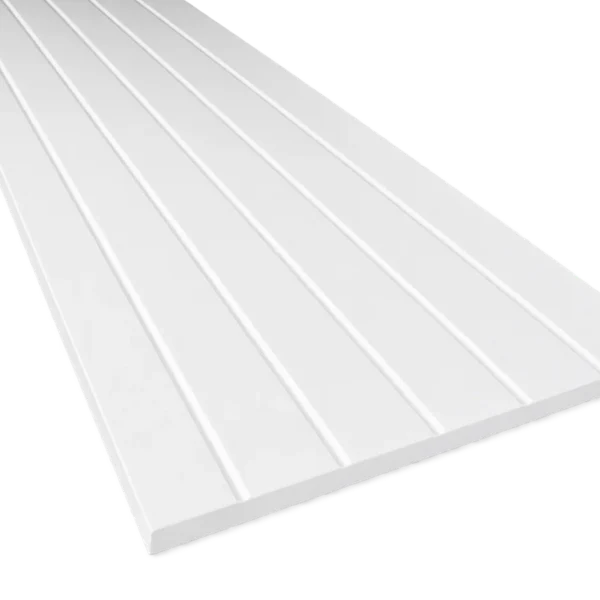
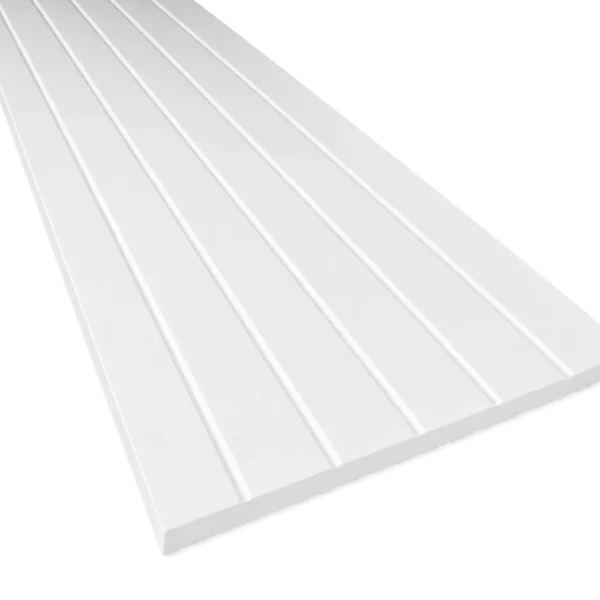
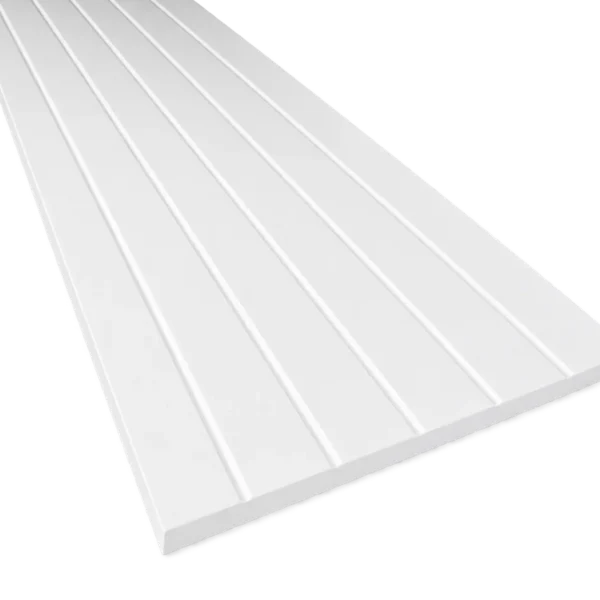
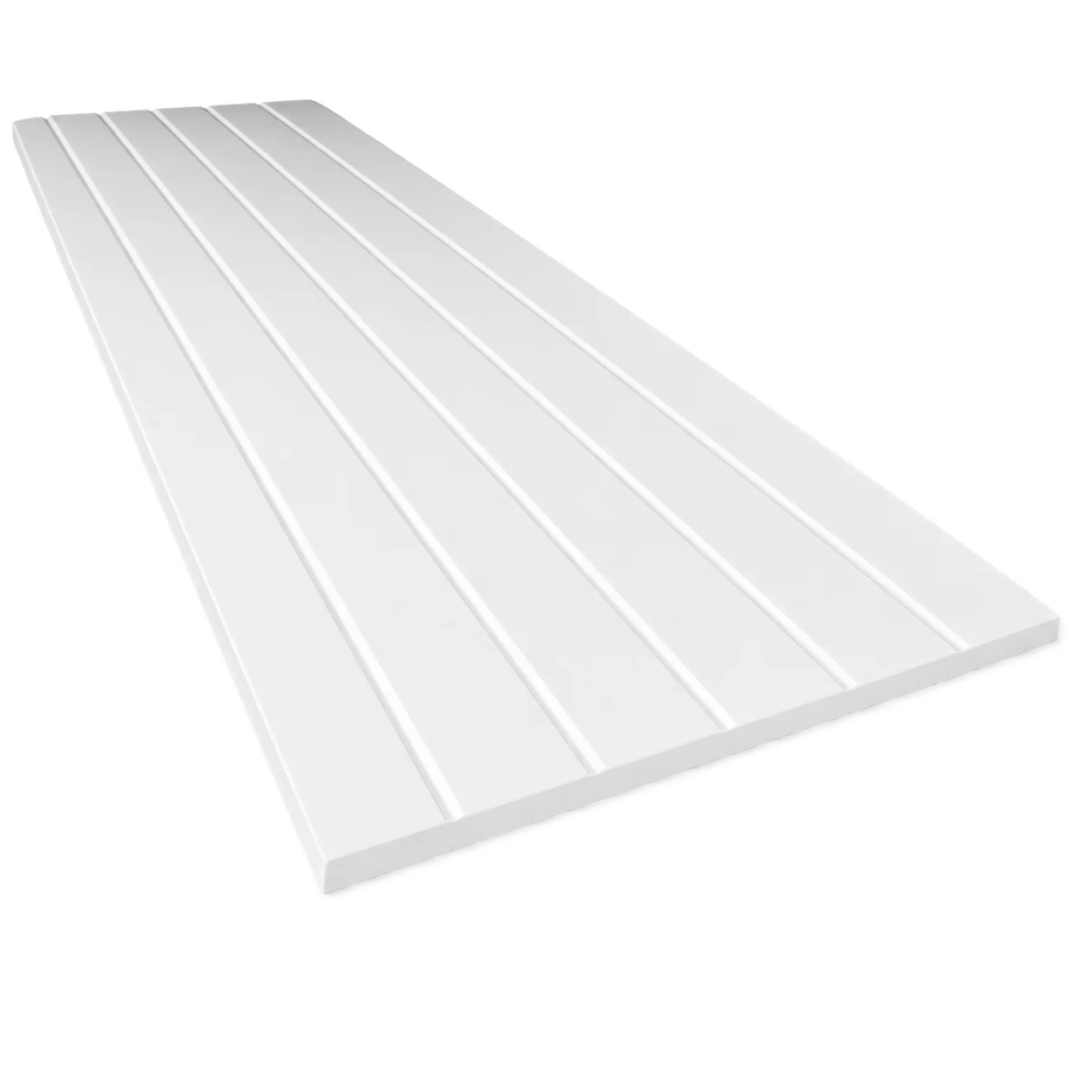
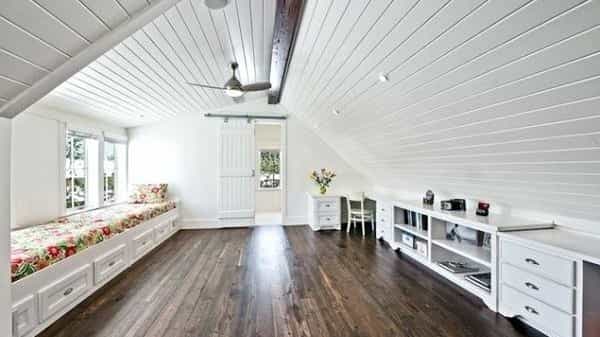
Summit XPS ceiling boards combine rigid thermal insulation with a neat, paintable ceiling surface. Choose 30mm, 40mm, 50mm or special-order 80mm board and one of the listed lengths from 1.8m to 8m, then select both options above to view the current price. The closed-cell XPS structure provides low water absorption, while tongue-and-groove and decorative profile options help create a clean finished ceiling. Suitable for nail-up ceilings, exposed roof structures, between-beam installations, selected retrofits and new roof systems. Nationwide delivery and professional installation in Cape Town and surrounding Western Cape areas are available.
✓ SABS-Approved Insulation Products
✓ Fast Delivery in Cape Town
✓ Professional Installation Available
Need Ceiling Insulation Installed?
“Their experienced teams install Aerolite and other ceiling insulation products…”
Summit XPS Ceiling Boards – Prices, Sizes and Thermal Performance
Summit XPS ceiling boards provide a finished ceiling surface and thermal insulation in one lightweight rigid panel. This makes them a practical alternative to conventional systems that require separate ceiling boards and insulation. They are particularly useful for exposed-beam homes, renovations, garages, patios, offices, retail buildings, agricultural structures and projects where limited ceiling depth must be used efficiently.
Summit Board is a locally manufactured extruded polystyrene, or XPS, insulation product. Its closed-cell construction slows heat transfer, resists moisture absorption and retains its thickness under normal service conditions. The boards are rigid and light enough for overhead installation, while the available tongue-and-groove, bevelled and pine-groove profiles allow the underside to form part of the visible interior finish.
Roof Insulations supplies standard 30mm, 40mm and 50mm Summit XPS ceiling boards, as well as 80mm boards for projects requiring greater thermal resistance. The manufacturer identifies thicknesses from 60mm to 100mm as special-order products, so 80mm availability, minimum quantities and lead times should be confirmed before ordering.
All boards have a nominal width of 600mm. The product options above include lengths from 1.8m to 8m. Not every thickness, length and profile will necessarily be available from stock at the same time. Select the required thickness and length above to see the current price, or contact Roof Insulations for help with quantities, finish profiles, delivery or installation.
What Are Summit XPS Ceiling Boards?
Summit XPS boards are manufactured from polystyrene resin in a continuous extrusion process. The material is melted, combined with the required additives and expanded to create a uniform closed-cell foam. The finished board is trimmed to thickness and length before the selected edge and decorative profile are formed.
The small closed cells trap gas within the board and restrict heat movement through the material. Summit publishes a thermal conductivity of 0.030 W/m·K. Because thermal resistance increases with thickness, a 50mm board provides more insulation than a 30mm board, while the special-order 80mm board provides the highest product R-value among the options on this page.
Unlike flexible ceiling-roll insulation, Summit Board can be installed as the visible ceiling surface. This can reduce the number of separate layers required and is especially valuable in exposed-truss or exposed-rafter designs. It does not, however, make one XPS thickness suitable for every building. The complete roof assembly and applicable climate-zone requirement must still be considered.
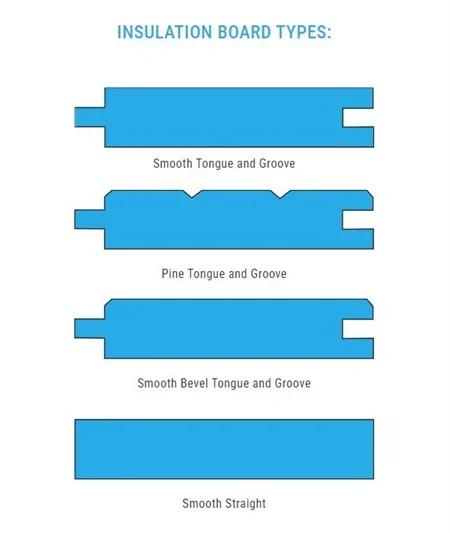
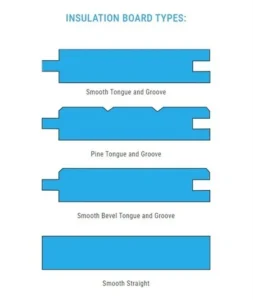
Summit publishes four board profiles:
- Smooth Tongue and Groove (SMTG)
- Pine Tongue and Groove (PITG)
- Smooth Bevelled Tongue and Groove (SBTG)
- Smooth Straight (SMST)
For a visible residential ceiling, the smooth bevelled or pine-groove finishes are normally the most deliberate-looking options. Smooth straight boards are intended for applications where a straight edge or a separate joining system is required. Confirm the profile before ordering because the visible joint pattern forms part of the completed ceiling.
Why Choose Summit XPS Ceiling Boards?
Summit Board is a strong choice when a project needs thermal insulation, a rigid ceiling surface and a clean finish in one system.
- Insulation and ceiling finish together: The board can reduce heat transfer while forming the visible underside of the ceiling.
- Good strength for a lightweight product: Summit publishes a density of 35–37 kg/m³ and compressive strength of 310–360 kPa.
- Low water absorption: Published water absorption is 0.5% by volume under the referenced test conditions.
- Multiple finish profiles: Smooth, bevelled and pine-groove options allow the ceiling appearance to suit the design.
- Long board lengths: Boards from 1.8m to 8m help reduce unnecessary butt joints when the correct length is selected.
- Tongue-and-groove installation: Interlocking edges help create an aligned and more continuous surface.
- Stable thickness: A rigid XPS board does not settle in the same way as loose or flexible insulation.
- Useful where depth is restricted: XPS provides practical thermal resistance without requiring a deep ceiling cavity.
- Wide application range: Summit can be used in nail-up ceilings, between trusses, above rafters, over purlins, under floors and in selected wall systems.
- Locally manufactured product: Summit is manufactured in South Africa by Swartland Insulation.
Summit XPS is not automatically the correct product for every ceiling. Where the existing ceiling is sound, and the only objective is maximum R-value or sound absorption, thick glass mineral wool installed above it may offer better thermal and acoustic value. Summit earns its place where strength, appearance, moisture resistance and a finished insulated ceiling are important together.
Summit XPS Sizes, R-Values and Specifications
The following values are taken from Summit’s current manufacturer information. They describe the board itself, not the total thermal resistance of every roof-and-ceiling assembly.
| Thickness | Published product R-value (m²·K/W) | Stock status | Nominal width | Listed length options |
|---|---|---|---|---|
| 30mm Summit XPS | R1.00 | Standard thickness | 600mm | 1.8m to 8m |
| 40mm Summit XPS | R1.33 | Standard thickness | 600mm | 1.8m to 8m |
| 50mm Summit XPS | R1.67 | Standard thickness | 600mm | 1.8m to 8m |
| 80mm Summit XPS | R2.67 | Special order; confirm availability | 600mm | Confirm available lengths |
Published Physical Properties
| Property | Manufacturer-published value |
|---|---|
| Material | Extruded polystyrene foam board (XPS) |
| Thermal conductivity | 0.030 W/m·K |
| Density | 35–37 kg/m³ |
| Compressive strength | 310–360 kPa |
| Water absorption | 0.5% by volume |
| Coefficient of linear thermal expansion | 0.049 mm per metre per °C |
| Dimensional stability | Less than 1.0% |
| Nominal board width | 600mm |
| Standard thicknesses | 30mm, 40mm and 50mm |
| Special-order thicknesses | 60mm to 100mm |
| Manufactured lengths | 1.8m to 8m |
| Edge and finish profiles | SMTG, PITG, SBTG and SMST |
| Fire classification | B/B1/2/H&V; manufacturer also publishes B-s1,d1 under SANS 53501-1 |
Summit’s current public data provides one declared R-value for each thickness. A separate aged thermal-conductivity or aged R-value is not published in the product information reviewed for this page. It would be misleading to invent one or substitute IsoBoard’s figures. The values above should remain the authoritative Summit table unless updated manufacturer documentation becomes available.
The complete roof-system R-value is affected by the roof covering, air layers, other insulation, ceiling construction, timber or steel thermal bridges, joints, fixings and workmanship. Compliance decisions should be based on the approved complete construction and current South African building requirements—not the XPS board value in isolation.
Which Summit XPS Thickness Should You Choose?
The correct Summit Board thickness depends on the required thermal performance, roof design, available ceiling depth, profile, budget and whether another insulation layer forms part of the system.
30mm Summit XPS Ceiling Boards
30mm Summit XPS has a published product R-value of R1.00. It is the thinnest and usually the most affordable standard option, making it useful where headroom or budget is restricted.
It may suit garages, patios, outbuildings, offices, selected retrofits and ceilings where a moderate thermal improvement is acceptable. For new homes or projects requiring a higher total roof R-value, 30mm alone may not be sufficient. The complete roof design should be checked before relying on it as the only insulation layer.
40mm Summit XPS Ceiling Boards
40mm Summit XPS provides a published R-value of R1.33. It offers approximately one-third more thermal resistance than 30mm while adding only 10mm to the board depth.
This makes it a practical middle option for residential renovations, exposed-beam ceilings, holiday homes, offices, garages and similar buildings where the owner wants an improved balance between cost, depth and thermal performance.
50mm Summit XPS Ceiling Boards
50mm Summit XPS provides a published R-value of R1.67. It is the highest-performing standard thickness in the manufacturer’s range and a sensible starting point when year-round comfort is more important than obtaining the lowest board price.
The extra thermal resistance can be valuable beneath exposed roofs and in homes or commercial buildings with strong summer heat gain or winter heat loss. The complete construction may still require additional insulation to meet the project’s total R-value target.
80mm Summit XPS Ceiling Boards
80mm Summit XPS provides a published R-value of R2.67. It offers the highest thermal resistance among the four variations sold on this page and can suit projects needing stronger performance from the rigid board itself.
Summit classifies 60mm to 100mm boards as special-order products. Confirm the required profile, length, minimum quantity, manufacturing lead time and delivery arrangements before designing a project around 80mm Summit Board.
Summit XPS Board Profiles and Ceiling Finishes
Thickness determines thermal resistance, but profile determines much of the visible ceiling appearance. This should be chosen before the order is placed rather than treated as an installation detail later.
Smooth Tongue and Groove
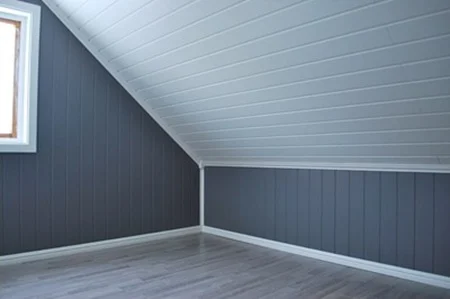
Smooth tongue-and-groove boards interlock along the long edges and create a clean, restrained ceiling surface. They are useful where the ceiling will be painted, and the customer wants a simple modern finish.
Pine Tongue and Groove
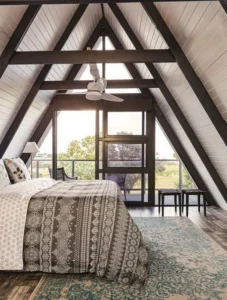
The pine-groove profile creates repeated decorative lines that imitate the rhythm of traditional timber ceiling boards. It can suit exposed-beam homes, loft-style rooms, entertainment areas, patios and interiors where a more detailed ceiling is preferred.
Smooth Bevelled Tongue and Groove
The bevel forms a deliberate line at the joint between adjacent boards. This helps turn minor board and installation tolerances into a planned design detail. It is a popular choice for visible nail-up ceilings.
Smooth Straight
Smooth straight boards do not use the standard tongue-and-groove joint. They may be specified with suitable H-sections, T-sections or another approved jointing method. Confirm the complete fixing and joint detail before ordering this profile.
All visible Summit ceilings can show minor extrusion flow lines or surface imperfections. The manufacturer recommends finishing the boards with two coats of good-quality water-based matt PVA. The first coat should be an acrylic filler coat to reduce the appearance of small indentations and imperfections.
Understanding Summit XPS Ceiling Board Prices
Summit XPS prices depend on board thickness, length, profile, quantity and current supplier costs. A longer or thicker board costs more per board, but the lowest board price is not necessarily the lowest completed ceiling cost.
When comparing Summit XPS ceiling prices, consider:
- Price per square metre rather than price per board alone
- Published R-value at the selected thickness
- Board length and the cutting waste created by the room layout
- Smooth, bevelled or pine-groove finish requirements
- Adhesive, concealed clips, screws, washers, battens, cornices and paint
- Delivery cost and access for long fragile boards
- Scaffolding, ceiling height and installation complexity
- Whether the system avoids a separate ceiling board and insulation layer
The variation selector above should remain the price authority because material and transport costs change. Avoid hard-coding a price list into the long description unless it will be maintained whenever product prices change.
Summit XPS Board Coverage and Quantity Guide
Each Summit board has a nominal width of 0.6m. Board coverage is therefore calculated by multiplying the length by 0.6m.
| Board length | Approximate area per board |
|---|---|
| 1.8m | 1.08m² |
| 2.1m | 1.26m² |
| 2.4m | 1.44m² |
| 2.7m | 1.62m² |
| 3.0m | 1.80m² |
| 3.3m | 1.98m² |
| 3.6m | 2.16m² |
| 4.0m | 2.40m² |
| 4.2m | 2.52m² |
| 4.8m | 2.88m² |
| 5.4m | 3.24m² |
| 6.0m | 3.60m² |
| 6.6m | 3.96m² |
| 7.2m | 4.32m² |
| 8.0m | 4.80m² |
A straightforward 60m² ceiling would require approximately 21 boards at 4.8m before allowing for offcuts and layout waste. That calculation does not mean 4.8m is automatically the correct length. The best length is the one that suits the room dimensions, board direction and support arrangement while avoiding visible butt joints wherever possible.
For an accurate quotation, provide the room dimensions, total ceiling area, selected thickness, preferred finish, roof or beam layout and delivery location. Photographs or a drawing are particularly helpful for exposed-beam and retrofit projects.
Where Summit XPS Ceiling Boards Can Be Installed
Summit Board can be incorporated into several ceiling and roof systems. The installation detail changes according to the building, structural support and whether the board will remain visible.
Nail-Up Ceilings
In a nail-up installation, Summit boards are fixed beneath levelled timber or steel battens to create a continuous insulated ceiling. The manufacturer specifies battens at a maximum of 700mm centres for standard internal applications, together with perimeter battens, approved adhesive and concealed fixing clips.
This method is commonly used in homes, schools, offices, retail buildings, garages and renovations. Boards should run from wall to wall without butt joints where practical, which makes correct length selection important.
Between Exposed Beams or Trusses
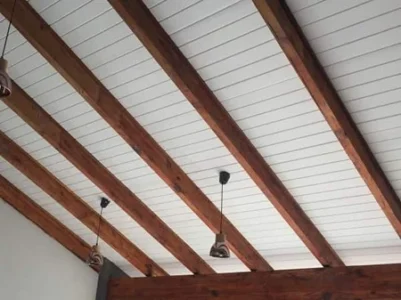
Summit boards can be cut and fixed between visible timber beams, rafters or trusses. This preserves the exposed structure while adding a neat insulated ceiling surface between the members.
Accurate measurement, straight support lines and careful finishing are essential because irregular gaps and cuts remain visible. The manufacturer recommends the same compatible screws, clips and adhesive principles used for nail-up ceilings.
Over-Truss or Over-Rafter Insulation
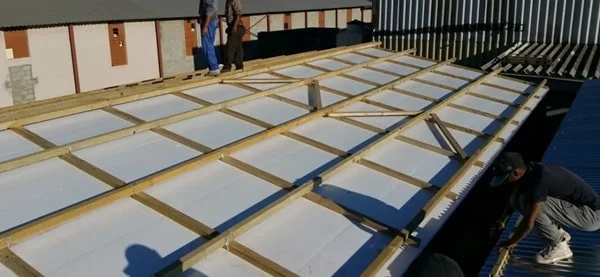
On suitable new roofs, Summit XPS can be installed over trusses or rafters to create a continuous insulated layer and exposed-truss finish below. The boards are laid in long lengths and should begin and end over a supporting truss or rafter.
This method affects the roof build-up, bracing and fastener length. It must be detailed according to the architect’s or roof engineer’s requirements. Summit Board must not be treated as a substitute for the structural bracing required by the roof design.
Over-Purlin Insulation
Summit Board can be fitted above purlins and beneath metal roof sheeting in industrial, commercial, retail and agricultural buildings. The board is secured as part of the roof-sheet fixing system.
The manufacturer publishes maximum purlin-spacing guidance that varies with board thickness and whether the sheeting is galvanised or painted. Roof design, wind loads, deflection, fasteners and sheet profile must be checked before construction. Summit also recommends ridge ventilation when 40mm or thicker board is installed beneath painted roof sheeting to help manage heat build-up.
Retrofit Beneath an Existing Ceiling or Soffit
Summit XPS can be installed beneath a suitable existing ceiling to cover damage, update the appearance and add thermal resistance. Battens may also be installed beneath a concrete soffit or uneven ceiling to create a level support surface.
The existing structure must be sound and able to accept the specified fixing system. Adhesive alone should not be assumed to support an overhead ceiling. Concealed clips, screws, washers, perimeter support and approved adhesive must be used according to the selected application.
Summit Board is also used for underfloor, surface-bed, cavity-wall and perimeter insulation. These are legitimate applications, but this product page is focused on ceiling boards. Obtain application-specific advice for floors, walls and specialised roof systems before ordering.
Thermal Comfort in South African Buildings
South African buildings experience both strong summer roof heat and winter heat loss. During hot weather, solar energy absorbed by the roof covering moves toward the cooler occupied rooms. During cold weather, heat generated indoors moves toward the colder exterior.
Summit XPS slows this heat movement. Increasing the board thickness increases thermal resistance, which is why 50mm and 80mm boards provide better insulation than 30mm. A continuous installation with neatly joined edges will also perform more consistently than one containing large gaps or badly fitted sections.
Insulation does not generate heating or cooling, and the same electricity-saving percentage cannot be promised for every property. Roof colour, orientation, ventilation, windows, shading, draughts, local climate, occupancy and the use of heating or air conditioning all influence the outcome.
The dependable benefit is reduced heat transfer compared with an equivalent uninsulated construction. This can improve indoor temperature stability and reduce the load placed on heating and cooling equipment.
Summit XPS and SANS 10400-XA Requirements
South Africa’s energy-efficiency requirements set minimum total R-values for roof assemblies according to climate zone and heat-flow direction. The requirement applies to the complete roof assembly—not simply the insulation board.
For this reason, a 30mm, 40mm or 50mm Summit board should not be described as automatically complying with every SANS 10400-XA application. Its product R-value contributes to the total, but the performance of the remaining roof components and any additional insulation must also be included.
Where plans, regulatory approval or a particular total R-value are involved, the architect, energy-efficiency professional or other competent person should confirm the complete build-up. Roof Insulations can provide the product values needed for that assessment.
Moisture Resistance, Condensation and Coastal Use
Summit XPS has a closed-cell structure and published water absorption of 0.5% by volume. This is substantially lower than many open-fibre materials and is useful in coastal buildings, humid interiors and roof systems where moisture resistance is important.
Low water absorption does not make Summit Board a roof-waterproofing membrane. Leaking roofs, failed flashings and condensation problems must still be repaired. Water entering the roof can damage timber, steelwork, electrical components, finishes and other materials even when the XPS board itself absorbs little moisture.
The whole system must suit the environment. Coastal fasteners should be chosen for the site’s corrosion exposure, bathrooms and kitchens require suitable ventilation, and external or semi-external ceilings must be fixed for wind and air-pressure differences.
Is Summit XPS Fireproof?
No. Summit XPS is combustible and should not be described as fireproof or non-combustible.
The manufacturer publishes a B/B1/2/H&V classification under SANS 428 and states that the board poses no flame-spread hazard under the referenced assessment. Summit also publishes a B-s1,d1 classification under SANS 53501-1. When exposed to fire, the board is described as shrinking away from the heat without flame spread or flaming droplets.
These test results are useful, but they do not convert XPS into non-combustible insulation. Summit must not be used in regulated applications where the building classification or approved design requires a non-combustible material.
The manufacturer states that lamp fittings passing through Summit Board should use bulbs generating no more than 70°C. Above that temperature, the board can soften and retract. Lightweight LED fittings are preferable; heavy fittings must be supported from framing above the board, transformers must be kept off the board, and the required clearances and ventilation must be maintained. Electrical work should be completed or checked by a competent electrician.
Acoustic Performance: What Summit XPS Can and Cannot Do
Summit XPS is a thermal insulation and ceiling product. Its rigid closed-cell construction does not absorb sound like open-fibre glass mineral wool or dedicated acoustic insulation.
The manufacturer specifically advises that Summit Board should not be used in isolation as a sound barrier. Where rain noise, traffic, voices or room-to-room sound control is important, fibrous acoustic insulation can be installed above the XPS ceiling as part of a properly designed layered system.
No unsupported NRC value should be advertised for Summit Board. Sound performance depends on the complete construction, including surface mass, cavity absorption, separation, joints and perimeter sealing.
Summit XPS vs IsoBoard Ceilings
Summit and IsoBoard are both South African rigid XPS products that can provide thermal insulation and a visible ceiling surface. They share many broad advantages, but their verified specifications are not identical.
| Feature | Summit XPS | IsoBoard |
|---|---|---|
| Material | Rigid closed-cell XPS | Rigid closed-cell XPS |
| Standard stocked thicknesses | 30mm, 40mm and 50mm | Commonly 30mm, 40mm and 50mm |
| Special thicker boards | 60mm to 100mm; confirm order requirements | Above 50mm generally made to order; confirm availability |
| 30mm published R-value | R1.00 | R1.143 |
| 40mm published R-value | R1.33 | R1.524 |
| 50mm published R-value | R1.67 | R1.905 |
| 80mm published R-value | R2.67 | R3.049 |
| Published thermal conductivity | 0.030 W/m·K | 0.02624 W/m·K |
| Published density | 35–37 kg/m³ | 32–36 kg/m³, subject to manufacturer tolerance |
| Published water absorption | 0.5% by volume | Less than 1% by volume |
| Finish options | Four named smooth, bevelled and pine profiles | Ceiling bevel and decorative groove options available |
At the same thickness, IsoBoard’s current published R-values are higher. Summit’s published density is higher than IsoBoard’s stated range, and Summit publishes strong compressive-strength values together with four clearly named finish profiles. These differences show why neither board should be declared universally better.
The practical choice should consider the required R-value, finish profile, board length, compressive strength, project specification, stock, lead time, price per square metre and installer familiarity. Customers can compare the IsoBoard ceiling product range before deciding.
Summit XPS vs Bulk Ceiling Insulation
Summit Board and bulk ceiling insulation solve different building problems. Both reduce heat transfer, but only the XPS board can form the finished ceiling surface.
| Feature | Summit XPS ceiling | Aerolite or Knauf ceiling roll |
|---|---|---|
| Main material | Rigid closed-cell XPS | Flexible glass mineral wool |
| Visible ceiling finish | Can form the finished ceiling | Requires a separate ceiling lining |
| Common product depth | 30mm to 50mm, with thicker special orders | Common ceiling rolls up to 135mm |
| Thermal performance | Efficient where depth is limited | Higher product R-values available in thick rolls |
| Water absorption | Very low | Must be protected from roof leaks and moisture |
| Sound absorption | Not its primary strength | Stronger acoustic absorption |
| Fire behaviour | Combustible with published tested classifications | Suitable products are non-combustible |
| Best reason to choose | Rigid insulated ceiling and finish in one | High thermal and acoustic value above a separate ceiling |
For perspective, 50mm Summit XPS has a published R-value of R1.67, while 135mm Aerolite and 135mm Knauf ceiling rolls are published at R3.38. The thicker bulk products provide more thermal resistance and better sound absorption, but they do not replace the ceiling finish.
The fair comparison is therefore between complete installed systems. If the building already has a good ceiling, adding bulk insulation above it may be more economical. If the ceiling must also be installed or replaced, Summit can solve the finish and insulation requirements together.
Summit XPS Ceiling Installation and Handling
Summit boards are lightweight, but their long lengths and profiled edges can be damaged by careless handling. Store boards in their original packaging, away from direct sun, weather and physical impact. Support long boards properly during transport and lifting.
Good nail-up installation practice includes:
- Confirm the board direction, thickness, length and finish profile before ordering.
- Level the timber or steel battens and install them at no more than 700mm centres for a standard internal nail-up ceiling.
- Fit perimeter battens around the room.
- Select boards long enough to run from wall to wall without butt joints wherever practical.
- Trim boards on site and allow the manufacturer’s specified 5mm gap at each wall.
- Use Summit-compatible water-based adhesive, concealed clips, screws and washers.
- Apply adhesive at the specified intervals and secure clips where board edges cross the battens.
- Join tongue-and-groove edges without forcing or damaging them.
- Support heavy light fittings from framing above the XPS board.
- Use only water-based cleaners, adhesive, fillers and paint; solvents can damage XPS.
Summit’s catalogue indicates adhesive coverage of approximately 30 m² per litre and about three concealed clips per square metre for a typical nail-up ceiling. Actual quantities can change with perimeter details, wind exposure, board layout and the selected installation method.
For eaves, verandas and other exposed applications, the manufacturer calls for closer support spacing and additional clips, screws and adhesive fixing points to manage wind and air-pressure differences. These installations should not simply copy the fixing pattern used inside a closed room.
Painting and Maintaining a Summit XPS Ceiling
The manufacturer recommends two coats of good-quality water-based matt PVA paint. The first should be an acrylic filler coat to cover minor surface marks and extrusion imperfections.
Do not use solvent-based adhesives, cleaners, paint or thinners because they can attack polystyrene. Where direct or reflected sunlight will reach the board, painting is required to protect the surface from accelerated UV ageing and discolouration.
If a board is intentionally left unpainted, its surface should be wiped before installation with the manufacturer-recommended diluted dishwashing-liquid solution to remove static charge and reduce dust attraction. In most visible residential interiors, a properly prepared painted finish will provide a more consistent appearance.
The ceiling should be inspected periodically for roof leaks, damaged joints, unsuitable hot fittings or movement in the supporting structure. Any roof or electrical problem should be corrected rather than covered with filler or paint.
Nationwide Delivery and Cape Town Installation
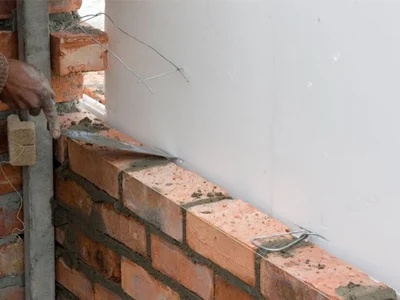
Roof Insulations supplies Summit XPS ceiling boards for projects throughout South Africa. Delivery charges and feasibility depend on board length, quantity, destination, access and unloading arrangements. Boards up to 8m are bulky and vulnerable to wind and edge damage, so transport must be planned carefully.
Professional Summit XPS ceiling installation is available through Cape Ceilings & Drywalling in Cape Town, the West Coast and surrounding Western Cape areas. The installation team can assess the roof or ceiling structure, beam layout, board direction, thickness, profile, support spacing, lighting and finishing requirements before quoting.
For installation assistance, visit our ceiling installers in Cape Town or request a quotation.
Why Buy Summit XPS From Roof Insulations?
Roof Insulations has more than 36 years of experience across residential, commercial and industrial insulation. With rigid ceiling boards, this experience matters because the cheapest board length or thickness can create more joints, waste or labour and may not provide the required thermal performance.
Customers benefit from:
- Genuine Summit XPS products manufactured by Swartland Insulation
- Standard 30mm, 40mm and 50mm boards plus special-order 80mm options
- Guidance on R-values, profiles, board lengths and quantities
- Help comparing Summit XPS with IsoBoard and bulk ceiling insulation
- Competitive product pricing
- Nationwide delivery quotations
- Professional installation in Cape Town and surrounding Western Cape areas
- Practical advice based on the roof design and intended finish
Select the required thickness and length above to view the current price. For larger orders, unusual profiles, 80mm boards or installation projects, contact Roof Insulations for a project-specific quotation before ordering.
Frequently Asked Questions About Summit XPS Ceiling Boards
What is Summit XPS Board?
Summit Board is a rigid extruded-polystyrene insulation panel manufactured in South Africa by Swartland Insulation. It can provide thermal insulation and, with the correct profile and installation, form a visible finished ceiling.
What thicknesses are available?
30mm, 40mm and 50mm are standard Summit thicknesses. The manufacturer identifies 60mm to 100mm as special-order thicknesses. This product page includes an 80mm option, but availability, minimum quantities and lead time should be confirmed.
What lengths are Summit XPS ceiling boards?
Summit boards are manufactured in lengths from 1.8m to 8m and have a nominal width of 600mm. Available combinations depend on thickness, profile and current stock.
What is the R-value of Summit XPS?
The published product R-values are R1.00 for 30mm, R1.33 for 40mm, R1.67 for 50mm and R2.67 for 80mm. These are board values and not the total R-value of every completed roof assembly.
Which Summit Board thickness is best for a ceiling?
50mm provides the highest R-value among the standard 30mm, 40mm and 50mm boards. 80mm provides more thermal resistance but is a special-order thickness. The correct choice depends on the complete roof design, required total R-value, available depth and budget.
How much do Summit XPS ceiling boards cost?
The price depends on thickness, length, profile and quantity. Select the required thickness and length above to view the current board price. Compare price per square metre and include the cost of battens, clips, adhesive, fasteners, cornices, paint, delivery and labour.
How do I calculate how many boards I need?
Multiply the selected board length by 0.6m to calculate the area per board. Divide the ceiling area by that coverage, round up and allow for cutting waste. Room dimensions and board direction must also be considered because the most efficient board length is not always the shortest or cheapest one.
Can Summit XPS be used as the finished ceiling?
Yes. This is one of its main benefits. Select a suitable ceiling profile, install the board with the approved fixing system and finish it with compatible water-based paint.
What Summit ceiling profiles are available?
The manufacturer lists Smooth Tongue and Groove, Pine Tongue and Groove, Smooth Bevelled Tongue and Groove and Smooth Straight. Confirm the exact profile before ordering because it affects the joint detail and final appearance.
Can Summit XPS ceilings be painted?
Yes. Summit recommends two coats of good-quality water-based matt PVA, with an acrylic filler coat first. Do not use solvent-based coatings because they can damage polystyrene.
Is Summit XPS waterproof?
Summit has low published water absorption of 0.5% by volume, but it is not a roof-waterproofing membrane. Roof leaks, flashings and condensation defects must still be corrected.
Is Summit XPS suitable for bathrooms and coastal homes?
Its closed-cell structure and low water absorption can make it suitable for humid and coastal conditions when the complete ceiling system is correctly designed. Ventilation, coatings and corrosion-resistant fixings must also suit the environment.
Is Summit XPS fireproof?
No. Summit XPS is combustible and must not be called fireproof or non-combustible. It has published fire classifications and is described as posing no flame-spread hazard under the referenced assessment, but it cannot be used where the approved design requires non-combustible materials.
Can downlights be installed in a Summit XPS ceiling?
Only compatible fittings and installation details should be used. Summit recommends lightweight LED lighting and states that bulbs passing through the board must not generate temperatures above 70°C. Transformers, heavy fittings, ventilation and clearances must follow the manufacturer’s guidance and electrical requirements.
Does Summit XPS provide soundproofing?
No single layer of Summit Board should be sold as soundproofing. It is primarily thermal insulation. Fibrous acoustic insulation and other system components may be added where improved rain-noise or sound control is required.
Can Summit XPS be fitted between exposed beams?
Yes. It can be cut and fixed between trusses, rafters or beams, leaving the timber visible. Precise measurement, straight supports and neat finishing are important because the edges remain visible.
Can Summit XPS be fitted beneath an existing ceiling?
Yes, in a suitable retrofit. Battens can be installed beneath an existing ceiling or concrete soffit to create a level support. The existing structure must be sound, and approved mechanical fixings and adhesive must be used.
Can Summit Board be installed above rafters or purlins?
Yes. Summit publishes guidance for over-rafter, over-truss and over-purlin systems. These installations affect the roof structure, bracing, fasteners and weatherproofing and should follow the approved building design.
Is Summit XPS better than IsoBoard?
Neither is universally better. IsoBoard publishes higher R-values at the same thickness, while Summit publishes a higher density range, strong compressive strength and four clearly defined finish profiles. Compare the actual thickness, R-value, finish, price, stock and project requirements.
Is Summit XPS better than Aerolite or Knauf?
It serves a different purpose. Summit can provide a rigid ceiling finish and insulation in one product. Thick Aerolite or Knauf rolls generally provide higher thermal resistance and better sound absorption, but they require a separate finished ceiling.
Can I install Summit XPS myself?
A skilled DIY installer may manage a small, simple ceiling, but long fragile boards, visible joints, overhead work, scaffolding, electrical fittings and specialised fixing details make professional installation the better choice for larger or more complex projects.
How should Summit XPS be stored?
Keep boards in their original packaging, supported, away from direct sunlight, weather and physical damage. Handle the profiled edges carefully and secure long boards against wind during transport and unloading.
Do you deliver Summit XPS throughout South Africa?
Yes. Roof Insulations can arrange nationwide delivery. The cost and practical delivery method depend on board length, quantity, destination and unloading access.
Do you install Summit XPS ceilings?
Professional installation is available through Cape Ceilings & Drywalling in Cape Town, the West Coast and surrounding Western Cape areas. Request a site-specific quotation for materials, support framing, fittings, labour and finishing.
Order Summit XPS Ceiling Boards
Choose 30mm, 40mm, 50mm or 80mm Summit XPS, select the required board length and view the current price above. If you need help calculating quantities, choosing a finish profile, comparing Summit with IsoBoard, arranging nationwide delivery or obtaining a Cape Town installation quotation, contact Roof Insulations before placing your order.